We just returned from a three week plus tour of Peru and we traveled in most modes of transportation excepting animal. Jean spent weeks pouring over tour books, calling airlines and booking agents to organize our trip. We began our journey by taking the long six-hour bus ride to Guayaquil over the “less-than-secondary” Ecuadorian road system. We arrived just in time to taxi over to the airport to catch our flight to Lima, Peru. We were met at the airport by the hotel driver so we didn’t have to figure that one out. Lima is a HUGH city with 8 million
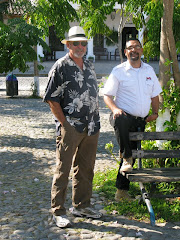
  people. We stayed in a nice part of town and had previously arranged to meet some boating friends there. The highlight for me was seeing my long-time friend Joe Smith who I hadn’t seen since 2005. Joe and I used to play guitar and fiddle together for years in Mexico
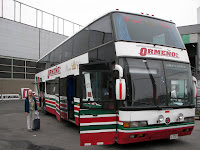
After two nights in Lima we climbed aboard a luxury, double-decker, semi-sleeper bus for the long ride to Ica. Of course we were served lunch, a dry ham (one slice) and cheese (one slice) sandwich with a choice of a glass (not a bottle)

of water or sticky sweet Inca Cola. From Lima south the land is all desert right down to the ocean and the road was bordered by high sand dunes. When we reached the coastal town of Pisco, which was mostly destroyed in the 2006 earthquake, we headed up into the high desert to Ica. Ah Ica, the noisiest town in Peru. There is hardly a private automobile in the town. The streets were crowded with yellow taxies (a universal color for taxies) and moto-cabs. From the sounds on the street they all have a working horn, bell, siren, or claxon. Our semi-cheap hotel ($15/night) was furnished with a nice horse hair and pebble mattress (said my back each morning) and two ten-pound pillows (I guess so you don’t steal them). The hot water was a 50/50 deal. However, it was quiet except for the 2 AM hooker some guy brought to his room. Oh, it was also good that we had a few rolls of toilet paper in our luggage. We surmised that hotel profit margins depend on how much toilet paper they give you. This was to be the norm for our whole trip.
In the morning we booked a tour to three local wineries where they not only produce some good wine but also distill a brandy they call Pisco . The Peruvian drink is a Pisco Sour, which is similar to a Gin Fizz. A big controversy exists between Chile and Peru as to who invented Pisco and Pisco Sours. Our ten o’clock tour found us quite tipsy by noon.
 Very early the next morning again boarded the bus for Nazca where we had booked an early afternoon flight to view the Nazca lines. Nazca lines are those shapes that were carved in the desert floor 3000 years ago and can only be fully seen from the air. We had a few hours to kill so we took a little tour of some excavated Peruvian tombs. It was a long ride out into the desert to the tomb site. There are hundreds of tombs but only a handful have been excavated. The burial site is Pre-Incan and so many people were buried here that the desert is littered with pieces of human bone!
  The mummies are very well preserved due to the dry climate. Our guide said it rains only 5 minutes per year in this area! From the tombs we went directly to the airport and boarded our six-passenger plane for an exciting flight over the Nazca lines. Not wanting to spend the night in Nazca we had booked another luxury bus trip to the mountain city of Arequipa located at 7,600 feet. Because the trip was 12 hours we were served two meals, the normal dry sandwich for lunch and for dinner, a nice change, lukewarm, deep-fried smelts on a heap of rice. We arrived in Arequipa around two in the morning.

Arequipa has a population of 750,000 and lies in a high-mountain valley. The central city is well preserved in the colonial style. We visited the 400 year old Monastery of Santa Catalina. The entrance fee was only $4 and we had an English speaking guide. Later we ate in some nice upscale restaurants. Through our hotel we booked an overnight tour to Chivay to take a tour of Colca Canyon where the attraction is the canyon itself which rivals the American Grand Canyon, sighting the Peruvian Condor and seeing the colorful locals.
The altitude at Chivay is 12,000 feet and most people get altitude sickness which consists mainly of a headache. Our tour took most of the day to drive to Chivay. Along the way we made a lot of stops to view the scenery and take pictures of Llamas and Vicunas a sort of miniature llama. In Chivay we stayed overnight in a room without heat (and, of course, little toilet paper). The bed was stacked with six-inches of Alpaca blankets but did have hot water. Early the next morning we traveled along the canyon to our ultimate destination of Pinchollo to observe Condors flying along the high cliffs along with a hundred or so other tourists. We were fortunate to see and photograph three Condors. From Pinchollo we drove all the way back to Arequipa. Back in town we had our hotel buy our bus
  tickets for the trip to Puno on the shores of Lake Titicaca, some 10 hours away. Yes, dry sandwich again!

 Ah Ica, the noisiest town in Peru. There is hardly a private automobile in the town. The streets were crowded with yellow taxies (a universal color for taxies) and moto-cabs. From the sounds on the street they all have a working horn, bell, siren, or claxon. Our semi-cheap hotel ($15/night) was furnished with a nice horse hair and pebble mattress (said my back each morning) and two ten-pound pillows (I guess so you don’t steal them). The hot water was a 50/50 deal. However, it was quiet except for the 2 AM hooker some guy brought to his room. Oh, it was also good that we had a few rolls of toilet paper in our luggage. We surmised that hotel profit margins depend on how much toilet paper they give you. This was to be the norm for our whole trip.
In the morning we booked a tour to three local wineries where they not only produce some good wine but also distill a brandy they call Pisco . The Peruvian drink is a Pisco Sour, which is similar
 to a Gin Fizz. A big controversy exists between Chile and Peru as to who invented Pisco and Pisco Sours. Our ten o’clock tour found us quite tipsy by noon.
 Very early the next morning again boarded the bus for Nazca where we had booked an early afternoon flight to view the Nazca lines. Nazca lines are those shapes that were carved in the desert floor 3000 years ago and can only be fully seen from the air. We had a few hours to kill so we took a little tour of some excavated Peruvian tombs. It was a long ride out into the desert to the tomb site. There are hundreds of tombs but only a handful have been excavated. The burial site is Pre-Incan and so many people were buried here that the desert is littered with pieces of human bone!
  The mummies are very well preserved due to the dry climate. Our guide said it rains only 5 minutes per year in this area! From the tombs we went directly to the airport and boarded our six-passenger plane for an exciting flight over the Nazca lines. Not wanting to spend the night in Nazca we had booked another luxury bus trip to the mountain city of Arequipa located at 7,600 feet. Because the trip was 12 hours we were served two meals, the normal dry sandwich for lunch and for dinner, a nice change, lukewarm, deep-fried smelts on a heap of rice. We arrived in Arequipa around two in the morning.
Arequipa has a population of 750,000 and lies in a high-mountain valley. The central city is well preserved in the colonial style. We visited the 400 year old Monastery of Santa Catalina. The entrance fee was only $4 and we had an English speaking guide. Later we ate in some nice
 upscale restaurants. Through our hotel we booked an overnight tour to Chivay to take a tour of Colca Canyon where the attraction is the canyon itself which rivals the American Grand Canyon, sighting the Peruvian Condor and seeing the colorful locals.
The altitude at Chivay is 12,000 feet and most people get altitude sickness which consists mainly of a headache. Our tour took most of the day to drive to Chivay. Along the way we made a lot of stops to view the scenery and take pictures of Llamas and Vicunas a sort
 of miniature llama. In Chivay we stayed overnight in a room without heat (and, of course, little toilet paper). The bed was stacked with six-inches of Alpaca blankets but did have hot water. Early the next morning we traveled along the canyon to our ultimate destination of Pinchollo to observe Condors flying along the high cliffs along with a hundred or so other tourists. We were fortunate to see and photograph three Condors. From Pinchollo we drove all the way back to Arequipa. Back in town we had our hotel buy our bus
  tickets for the trip to Puno on the shores of Lake Titicaca, some 10 hours away. Yes, dry sandwich again!

Lake Titicaca ….. always heard of it, now we’re there! It is South America’s largest lake and the world’s highest navigable lake. Sitting at around 13,000 feet the air is brilliant blue and the water a comfortable 42 degrees! A tour to the famous floating reed islands starts early in the morning. We boarded small covered boats that hold about 30 persons for the one hour trip to the islands.  We were one of the first tour boats to leave but we were quickly passed by 25 or so faster boats. The island residents are totally dependent on tourism. They give demonstrations on how they live and sell hand-made crafts. We took a fun ride aboard a reed boat and purchased a few items. After a couple of hours we boarded our boat and motored two more hours to another regular island where we had lunch. We walked around the entire island which isn’t that easy at that altitude. We departed in the late afternoon and our boat was the slowest in the fleet so our return trip ended after dark. Early the next morning (geez, I’m getting tired of getting up early) we
  had booked a first class train trip to Cusco aboard the Andean Explorer. The last time I took a train trip was in 1964. So, we get up and go down to the street and hail a pedi-cab for the 3 or 4 block trip to the train station. Well the driver thinks we want the train which
  is located next to the lake (which we don’t). When it becomes obvious that he is going to the wrong place we have only 20 minutes to catch our train! We tell him we want the other train. “Mas rapido” we tell him because we are going to be late but, he doesn’t know where the other station is located so he takes us to the bus station where we grab the first moto-cab we see and tell him “mas rapido”. Well, we go flying in this contraption through, thankfully, the semi-deserted streets of Puno and after a couple of wrong turns, make it to the station with 10 minutes to spare.
 We were one of the first tour boats to leave but we were quickly passed by 25 or so faster boats. The island residents are totally dependent on tourism. They give demonstrations on how they live and sell hand-made crafts. We took a fun ride aboard a reed boat and purchased a few items. After a couple of hours we boarded our boat and motored two more hours to another regular island where we had lunch. We walked around the entire island which isn’t that easy at that altitude. We departed in the late afternoon and our boat was the slowest in the fleet so our return trip ended after dark. Early the next morning (geez, I’m getting tired of getting up early) we
  had booked a first class train trip to Cusco aboard the Andean Explorer. The last time I took a train trip was in 1964. So, we get up and go down to the street and hail a pedi-cab for the 3 or 4 block trip to the train station. Well the driver thinks we want the train which
  is located next to the lake (which we don’t). When it becomes obvious that he is going to the wrong place we have only 20 minutes to catch our train! We tell him we want the other train. “Mas rapido” we tell him because we are going to be late but, he doesn’t know where the other station is located so he takes us to the bus station where we grab the first moto-cab we see and tell him “mas rapido”. Well, we go flying in this contraption through, thankfully, the semi-deserted streets of Puno and after a couple of wrong turns, make it to the station with 10 minutes to spare.
First class aboard the Andean Explorer is very first class. We sat in nice living room chairs at a big table across from a young British couple. We were served a fancy lunch and some drinks and later, we were entertained by two different Peruvian folk song groups and a fashion show. The thought of traveling by train across the Andes was exciting. Our highest point was at La Raya at an altitude of 14,000 feet. It was never-to-be-forgot experience. We arrived in Cusco in the early evening. Jean had booked an expensive hotel room ($35/night) because she wanted hot water, heat, a nice bed and toilet paper. Our room was complete with a fireplace and satellite TV (CNN in English!).
 The thought of traveling by train across the Andes was exciting. Our highest point was at La Raya at an altitude of 14,000 feet. It was never-to-be-forgot experience. We arrived in Cusco in the early evening. Jean had booked an expensive hotel room ($35/night) because she wanted hot water, heat, a nice bed and toilet paper. Our room was complete with a fireplace and satellite TV (CNN in English!).
  Cusco is a nice city of 300,000 people and steeped in rich Peruvian history. Much of the town is lined with ancient Inca-built massive stone walls. Jean planned on four nights here. We spent time walking up and down the narrow streets taking lots of pictures. We stopped at a local guitar maker and I played a few of his instruments. We also walked through plenty of artesian markets to purchase our last-chance items.
 OK .... That's most of our trip. I'll upload the remainder this weekend. Whew!